EU AI Act Market Surveillance Operations: Building the Art.72→Art.73→Art.74 Incident-to-NCA Pipeline
Post #3 in the sota.io EU AI Act Market Surveillance Operations Series — EU-AI-ACT-MARKET-SURVEILLANCE-OPS-2026 #3/5
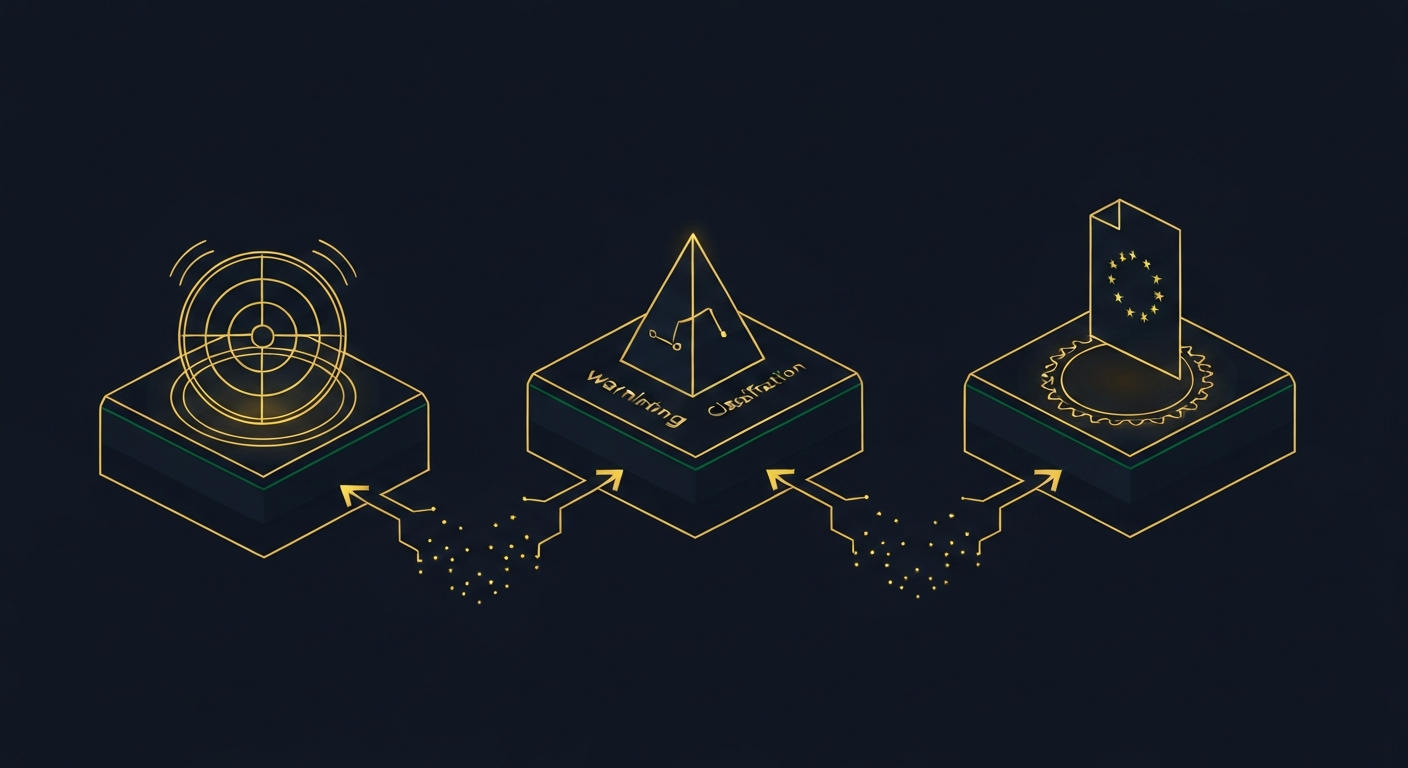
Most high-risk AI providers treat post-market monitoring (Art.72), serious incident reporting (Art.73), and NCA market surveillance (Art.74) as three separate compliance workstreams. They are not. They form a single escalation pipeline: Art.72 monitoring generates the data, Art.73 incident thresholds determine when that data triggers a report, and Art.73 reports automatically open the door to Art.74 NCA inspections.
This guide maps the complete operational pipeline — from monitoring instrumentation through incident classification to NCA access — and shows the infrastructure you need to build before August 2, 2026.
The Three-Stage Pipeline
Art.72 Post-Market Monitoring
        │
        │ monitoring data → anomaly → threshold breach
        ▼
Art.73 Serious Incident Reporting
        │
        │ NCA notification → triggers market surveillance
        ▼
Art.74 NCA Market Surveillance Access
        │
        │ inspection request → documentation demand → system access
        ▼
   NCA Investigation
The pipeline is automatic: once Art.73 is triggered, the NCA has authority under Art.74 to access your system, demand documentation, and conduct inspections. Your Art.72 monitoring data becomes the primary evidence corpus.
Stage 1: Art.72 Post-Market Monitoring — The Data Foundation
What Art.72 Requires
Art.72 obliges providers of high-risk AI systems to establish a post-market monitoring system that:
- Continuously collects performance, accuracy, and safety data from deployed instances
- Covers the full deployment lifecycle — from initial deployment through updates and decommissioning
- Documents all incidents — not just serious incidents, but any performance anomalies that could escalate
- Integrates with technical documentation — monitoring data must link to the Art.11 technical documentation package
The Monitoring Data Model
Build your Art.72 monitoring around four data categories that directly feed Art.73 incident classification:
1. Performance metrics
- Accuracy and confidence scores per decision
- Error rates against validation dataset (distributional drift)
- False positive / false negative rates for safety-critical outputs
2. Deployment context
- User population characteristics relevant to the high-risk AI use case
- Infrastructure changes (model updates, integration changes, data pipeline changes)
- Geographic deployment scope (relevant for cross-border Art.66/Art.75 triggers)
3. Harm signals
- Complaints or disputes from users or affected persons
- Escalations to human oversight (Art.14 override events)
- External signals: regulatory complaints, legal challenges, media reports
4. Human oversight events
- Art.14 human override count and reason codes
- Cases where the system was shut down by operators
- Escalations to the Art.9 risk management process
Infrastructure Requirements
Your Art.72 monitoring infrastructure must be NCA-accessible. Art.74(1) gives NCAs the right to access your AI system and the data it processes. This means:
# Required monitoring infrastructure for NCA access
monitoring:
  data_retention: 10_years_minimum  # Art.12(1) logging requirement
  access_controls:
    nca_read_access: true            # Art.74(1) access right
    audit_log: immutable             # Art.12(2) audit trail
  export_formats:
    - structured_json
    - human_readable_pdf             # For NCA review
  incident_record_schema:
    incident_id: uuid
    detection_timestamp: iso8601
    classification: serious|non_serious|anomaly
    affected_persons_count: integer
    harm_category: health|safety|fundamental_rights|property
    resolution_status: open|reported_to_nca|closed
Stage 2: Art.73 Serious Incident Reporting — The Threshold Logic
Incident Classification Under Art.73
Art.73(1) defines a "serious incident" as any malfunction or unintended use that directly or indirectly causes:
- Death or serious harm to the health of a person
- Serious and irreversible disruption to critical infrastructure management
- Infringement of obligations under Union law protecting fundamental rights
- Serious property damage or environmental harm
Your Art.72 monitoring system must implement threshold logic that automatically classifies incidents against these four categories.
Classification Decision Tree
def classify_incident(event: MonitoringEvent) -> IncidentClassification:
    # Fatal or mass harm: immediate NCA notification
    if event.fatality_count > 0 or event.serious_harm_count >= 5:
        return IncidentClassification(
            type="serious_incident",
            reporting_timeline_days=2,    # Art.73 immediate notification
            nca_access_triggered=True
        )

    # Individual serious harm
    if event.serious_harm_count > 0:
        return IncidentClassification(
            type="serious_incident",
            reporting_timeline_days=15,   # Art.73(6) standard timeline
            nca_access_triggered=True
        )

    # Fundamental rights infringement
    if event.fundamental_rights_breach:
        return IncidentClassification(
            type="serious_incident",
            reporting_timeline_days=15,
            nca_access_triggered=True
        )

    # Potential escalation — track, do not yet report
    if event.harm_probability > 0.7:
        return IncidentClassification(
            type="potential_serious_incident",
            reporting_timeline_days=None,  # Monitor; may escalate
            nca_access_triggered=False
        )

    return IncidentClassification(type="non_serious", ...)
Reporting Timelines
The timeline from detection to NCA notification is specified in implementing acts under Art.73(6):
| Incident Type | Deployer → Provider | Provider → NCA |
|---|---|---|
| Fatal or mass harm | Immediately | 2 working days (initial) |
| Standard serious incident | Without undue delay | 15 working days |
| Intermediate report | — | 10 working days (after initial) |
| Final report | — | 1 month (after initial) |
Critical implementation note: The clock starts when the provider becomes aware of the incident — not when the deployer first observed it. Your Art.72 monitoring system must timestamp awareness events precisely, because NCAs will audit the gap between your monitoring logs and your Art.73 submission.
The Deployer-Provider Notification Chain
Art.73(3) requires deployers to notify providers when they identify a serious incident. Your provider infrastructure needs:
- Deployer notification endpoint — a secure channel for deployers to report incidents to you
- Acknowledgment receipts — timestamped confirmation you received the deployer's notification
- Incident aggregation — logic to combine multiple deployer reports of the same underlying issue into a single Art.73 report
The NCA will examine whether deployer notifications were received and actioned appropriately. Your monitoring logs (Art.72) provide the corroborating evidence.
Stage 3: Art.74 NCA Market Surveillance — The Inspection Trigger
How Art.73 Reports Trigger Art.74 Inspections
Art.73 reports are submitted to the national competent authority responsible for market surveillance in the member state where the provider is established (or, for non-EU providers, where the authorized representative is located). Once the NCA receives an Art.73 report, Art.74 gives them authority to:
- Request documentation — all technical documentation under Art.11, Art.13, Art.17, and Art.64
- Access the AI system — direct access to the system, including source code under Art.74(2)
- Conduct physical inspections — access to premises where the system is deployed or managed
- Compel corrective measures — require system modifications, suspension, or market withdrawal
What NCAs Examine First
Based on Art.74 inspection scope and the incident that triggered the inspection, NCAs will first examine:
From your Art.72 monitoring system:
- The monitoring logs surrounding the incident timestamp
- Whether anomaly detection was active and functioning
- Whether your monitoring system would have detected this incident earlier
From your Art.73 report:
- Timeline accuracy: was the gap between detection and notification compliant?
- Completeness: were all affected persons and harm categories documented?
- Corrective actions: what immediate mitigations did you implement?
From your Art.11 technical documentation:
- Whether the risk management system (Art.9) covered this incident type
- Whether the training data documentation (Art.10) indicates root cause
- Whether human oversight mechanisms (Art.14) functioned as documented
The Art.64 Documentation Package
Art.64 gives NCAs the right to access all information and data "necessary for the purpose of market surveillance." When your Art.73 incident report arrives at the NCA, prepare to produce within 48-72 hours:
NCA Documentation Package (Art.64 Access)
├── technical_documentation/          # Art.11 complete package
│   ├── system_description.pdf
│   ├── risk_management_records.pdf   # Art.9
│   ├── training_data_documentation.pdf # Art.10
│   ├── human_oversight_procedures.pdf  # Art.14
│   └── conformity_assessment.pdf
├── monitoring_data/                   # Art.72 records
│   ├── incident_logs_[date_range].json
│   ├── performance_metrics.csv
│   └── anomaly_detection_log.json
├── incident_record/                   # Art.73 record
│   ├── initial_report.pdf
│   ├── intermediate_report.pdf
│   ├── deployer_notifications/        # Timestamped chain
│   └── corrective_actions_taken.pdf
└── source_code/                       # Art.74(2) if requested
    └── inference_pipeline/            # AI inference components
Building the Pipeline: Engineering Checklist
Art.72 Monitoring — Build This First
- Continuous performance metrics collection — accuracy, confidence, error rates per inference call
- Harm signal instrumentation — user complaints, human overrides, critical output flags
- Immutable audit log — append-only storage with cryptographic integrity (Art.12 requirement)
- 10-year retention — data retention policy aligned to Art.12 minimum
- NCA access architecture — read-only access control that can be provisioned for NCA review
- Export capability — produce structured JSON and human-readable PDF of any time range
Art.73 Incident Classification — Build This Second
- Incident detection pipeline — automated classification of Art.73 threshold events
- Awareness timestamp logging — precise timestamp when provider first becomes aware
- Deployer notification endpoint — secure channel for deployer incident reports
- Notification timeline tracker — automated alert when report deadlines approach
- Incident record generator — structured output matching Art.73 report format
- Multi-deployer aggregation — logic to consolidate incidents from multiple deployers
Art.74 NCA Readiness — Build This Third
- Documentation package assembly — automated Art.64 package from Art.72 logs + Art.73 record + Art.11 docs
- Source code access procedure — documented process for Art.74(2) code access requests
- Physical inspection preparation — identified personnel, access credentials for NCA visits
- Legal response SLA — defined internal escalation: who responds to NCA contact within what timeframe
- Cross-border coordination protocol — process for Art.66/Art.75 multi-NCA cases
Infrastructure on EU-Sovereign Infrastructure
One operational detail that NCAs are starting to examine: where your Art.72 monitoring data lives. Market surveillance authorities have jurisdiction over EU-deployed AI systems — but if your monitoring data is stored on AWS (US-parent, CLOUD Act exposure) or similar US cloud infrastructure, NCAs face a practical access problem. The data is technically in EU servers but legally reachable by US authorities.
For Art.74 compliance, the cleaner architecture stores your monitoring logs on infrastructure without US-parent legal exposure — Hetzner, OVHcloud, or a managed PaaS like sota.io running on Hetzner Germany. This removes the CLOUD Act ambiguity from your Art.72 compliance posture before NCAs inspect it.
Timeline: What to Complete Before August 2, 2026
| By | Task |
|---|---|
| Now | Design Art.72 monitoring data model and instrumentation plan |
| 4 weeks | Implement continuous performance metrics collection |
| 6 weeks | Deploy incident classification pipeline with Art.73 threshold logic |
| 8 weeks | Complete NCA documentation package assembly automation |
| August 2, 2026 | Full AI Act enforcement — all Art.72/73/74 obligations active |
Key Takeaways
The Art.72→Art.73→Art.74 pipeline is not three separate compliance workstreams. It is one integrated evidence chain:
- Art.72 monitoring generates the raw data
- Art.73 classification logic determines when that data triggers a report
- Art.73 reports automatically open your system to Art.74 NCA inspection
- Your monitoring infrastructure becomes the primary evidence corpus NCAs examine
Build the pipeline end-to-end before August 2, 2026. Post #4 in this series covers Art.82 formal non-compliance notifications — what happens when Art.74 inspections identify compliance gaps.
Post #3 in the sota.io EU AI Act Market Surveillance Operations Series. Post #1: Art.74 NCA Inspection Powers | Post #2: Art.72 Post-Market Monitoring System
EU-Native Hosting
Ready to move to EU-sovereign infrastructure?
sota.io is a German-hosted PaaS — no CLOUD Act exposure, no US jurisdiction, full GDPR compliance by design. Deploy your first app in minutes.